

WHAT IS POVERTY
Real roots and Biblical solutions
Missional Sustainability- Part 1
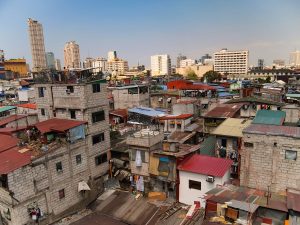
Perhaps very few of us truly understand what poverty really is. Many may see poverty as the unfortunate “lack of basic human needs” (food, security, housing, education and healthcare, etc) and as such, may address the problem of poverty by building charity programs to simply meet these needs.
After much research on the topic, one missionary leader wrote a confidential 2020 dissertation on missional sustainability. He found that: “This focus on the material missing elements fails to address the true essence of poverty, namely a marred sense of identity and vocation while the true causes are relationships that do not work for the well-being of all. Because the nature of poverty is fundamentally relational, ultimately the goal of transformational development is the transformation of relationships.” Above we see poverty made up of three flawed understandings: identity, vocation, and relationships. Here is what the Bible has to say:
IDENTITY: We are children of God, made by Him and fully dependent on Him-
- “See what great love the Father has lavished on us, that we should be called children of God! And that is what we are!” (1 John 3:1a).
- “The earth is the Lord’s, and all it contains; the world and those who dwell in it.” (Psalm 24:1).
VOCATION: We are called to Lead, work and care for God’s creation-
- “God blessed them and said to them, “Be fruitful and increase in number; fill the earth and subdue it. Rule over the fish in the sea and the birds in the sky and over every living creature that moves on the ground.” (Genesis 1:28)
- “The Lord God took the man and put him in the Garden of Eden to work it and take care of it.” (Genesis 2:15)
RELATIONSHIPS: We are created for relationship, to love and look after one another-
- “And since I, the Lord and Teacher, have washed your feet, you ought to wash each other’s feet. I have given you an example to follow. Do as I have done to you.” (John 13:14,15)
M100 was founded on such Biblical principles. We believe that the fight against poverty goes beyond the material, and includes addressing flawed understandings of leadership, work and care as seen in Genesis.
We believe that local businesses that meet needs in societies are important to remove dependence on outside help. By local believers and missionaries partnering with the right individuals, they can address the world around them and effectively “rule” or “lead” in their spheres. Also, supporting local entrepreneurs allows for the creation of “work” and the eventual “care” of dependents.
By understanding poverty as a relational disease, we must serve, nurture, and influence one another to see transformed relationships that multiply. M100 is here to do just that.
Time for Action
How are you currently influencing (leading), serving (working), or nurturing (caring) for those around you? How are you doing the above in and through your vocation?